 Pocket
Hangboard Workout: 6 Hangboard Exercises & Routines by Level
A hangboard is the most efficient finger strength tool in climbing, but only if you use it right. This guide covers 6 key hangboard exercises, a ready-made hangboard routine for each level, how to warm up, and the mistakes that get climbers injured. New to hangboards? Start with our beginner's guide to hangboards first, or see how to choose the best hangboard if you don't own one yet.
Key takeaways: Beginners do feet-assisted repeaters. Intermediates add max hangs. Advanced climbers use minimum-edge and one-arm work. Everyone warms up for 15 minutes, trains at most twice a week, and stops at the first sign of finger pain.
Ground rules for every hangboard workout
Safety first: Hangboarding puts high loads on finger pulleys and tendons. Wait until you've climbed consistently for several months to a year. Stop immediately if you feel sharp pain, a pop or swelling at the base of a finger, and see a physical therapist.
- Max 2 sessions a week, with at least 48 hours between them.
- Open hand or half crimp only. Skip the full crimp on a board.
- Leave reps in reserve. Finish each set feeling like you could do 1–3 more hangs.
- Progress load before edge size. Add a little weight (or take off assistance) before moving to a smaller edge.
The hangboard warm-up (15 minutes)
This is the hangboard-specific version. Before a climbing session, use our general climbing warm-up routine instead.
- 5 minutes of light cardio: jumping jacks, a brisk walk or easy rowing.
- Arm circles, shoulder rolls and wrist circles, or an easy minute per hand on a gyro ball.
- Rubber-band finger extensions or a few minutes on a hand-held climbing block to get blood into the fingers.
- 3–4 easy hangs on the biggest edge with feet on the floor, building from about 30% to 70% effort.
6 hangboard exercises every climber should know
1. Feet-assisted hangs
Level: beginner. Hang from a large edge with your feet on a chair or the floor, taking part of your body weight. This lets you control the load precisely and is the safest way to start any hangboard routine.
2. Repeaters (7/3)
Level: beginner to intermediate. Hang 7 seconds, rest 3 seconds, six times in a row for one set. Repeaters build strength and strength-endurance, and they're the most common hangboard exercise.
3. Max hangs
Level: intermediate to advanced. Short, heavy hangs of about 10 seconds on a medium edge (often 18–20 mm), with 3–5 minutes of rest between them. Do 3–5 hangs. Climbers usually add weight with a harness or belt once bodyweight feels easy. Max hangs build peak finger strength.
4. Minimum edge hangs
Level: advanced. Instead of adding weight, find the smallest edge you can hold for about 10 seconds at bodyweight. Train just above that edge size. It's an alternative to weighted max hangs when you don't have a weight belt.
5. Long-duration low-intensity hangs
Level: all levels. Easy hangs of 20–40 seconds at low intensity, with your feet taking most of the weight. Some climbers use these on easy days to keep fingers conditioned without heavy loading.
6. Hangboard pull-ups and lock-offs
Level: intermediate. Use the big jugs at the top of the board for pull-ups and lock-offs (holding at 90° or fully bent arms). They build the pulling strength that climbing demands, without loading small edges.
Hangboard routines by level
| Level | Hangboard routine | Frequency |
|---|---|---|
| Beginner (climbing 6–12+ months) | Warm-up, then 2–3 sets of feet-assisted 7/3 repeaters on a 20 mm+ edge, open hand. 3 min rest between sets. | 1–2× / week |
| Intermediate | Warm-up, then 3–5 max hangs (10 s, 3–5 min rest) on 18–20 mm, half crimp. Finish with 3 × 5 pull-ups on jugs. | 2× / week |
| Advanced | Warm-up, then 4–6 weighted max hangs or minimum-edge hangs, plus 2–3 sets of one-arm assisted hangs per side. | 2× / week, cycled with rest weeks |
Run a routine for 4–6 weeks, then take an easier week before progressing. If you're also following a climbing training plan, put hangboard sessions on climbing days, after the warm-up and before hard climbing, so rest days stay rest days.
What to do between hangboard sessions
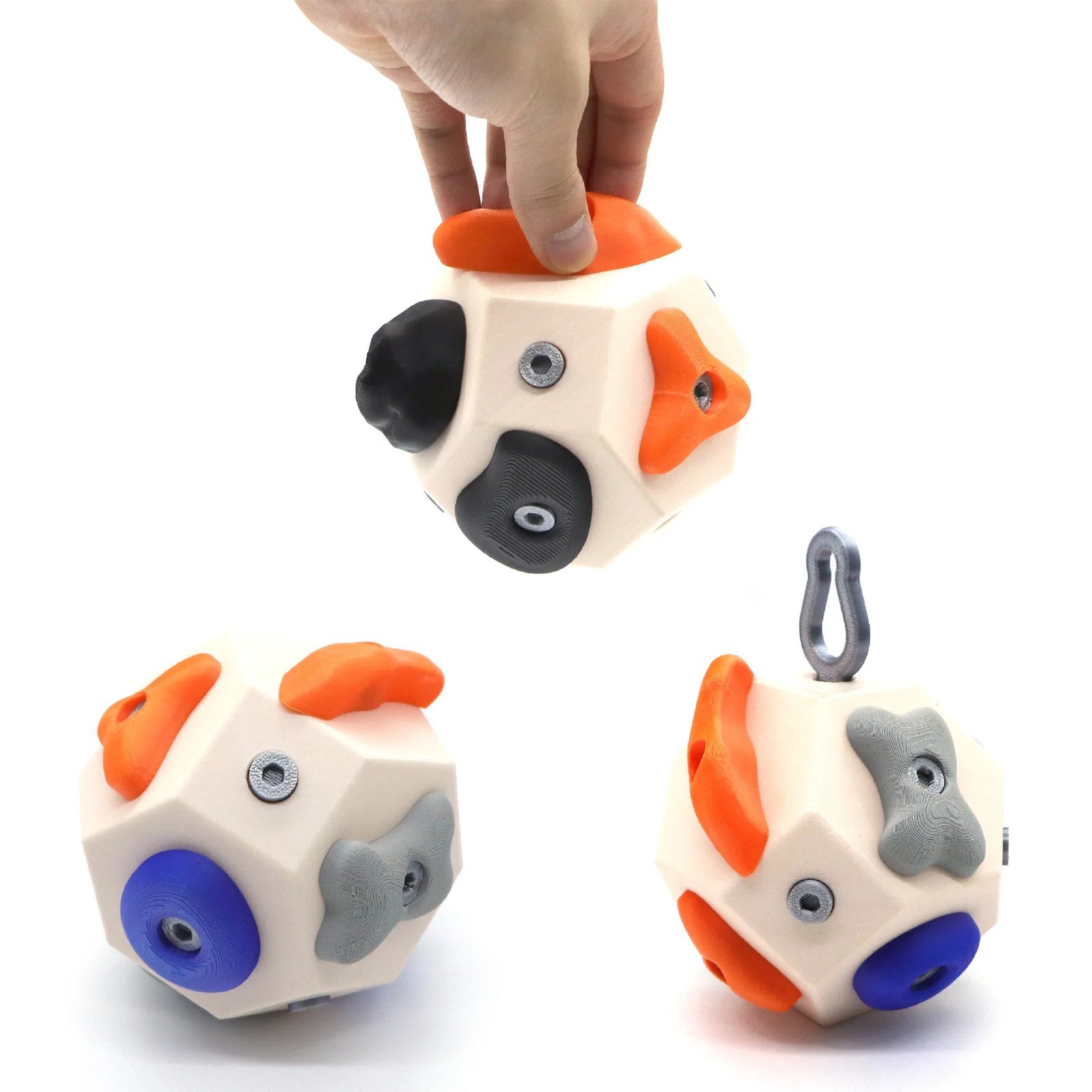
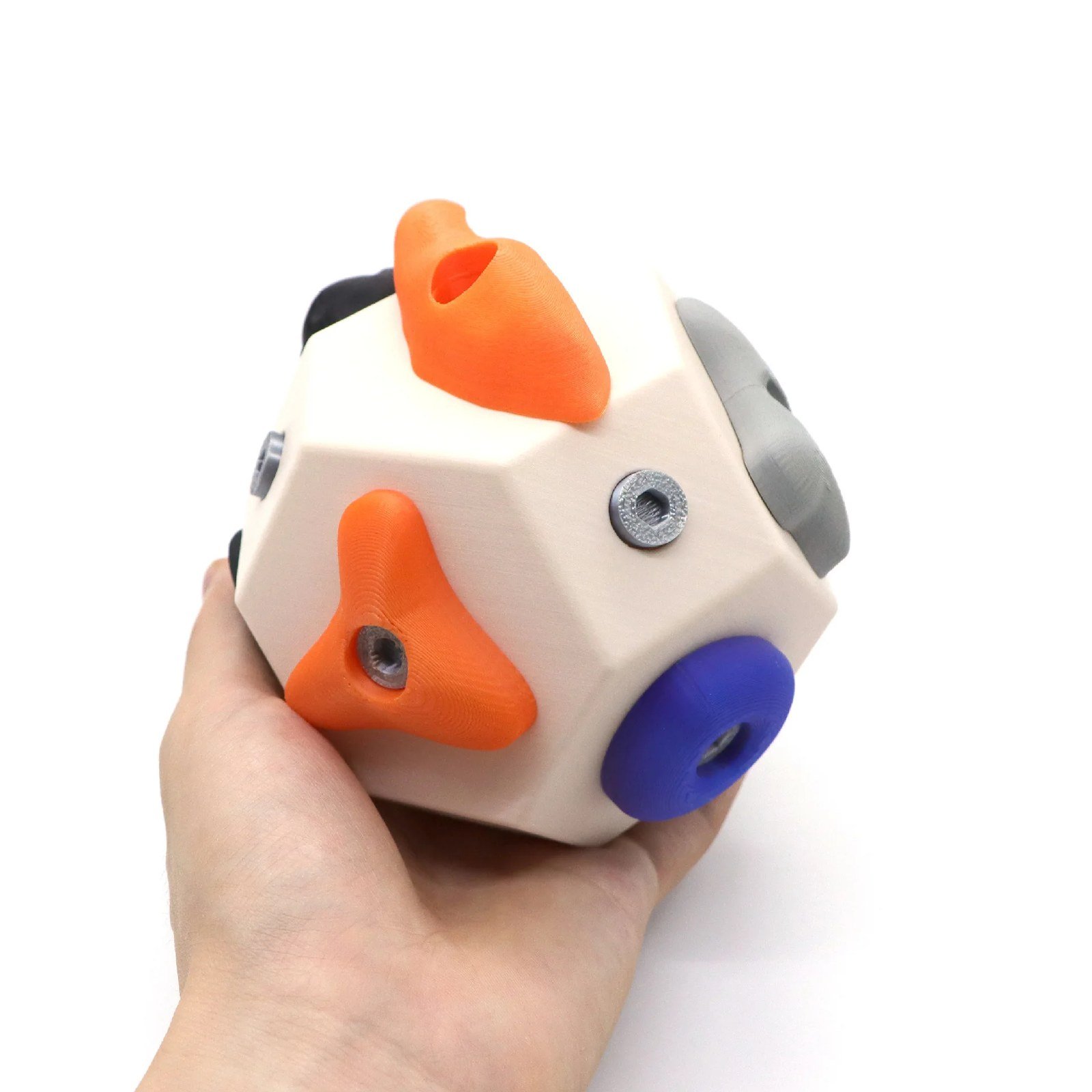
Rest days are when fingers adapt. Keep them light: extensor band work, mobility, and low-load grip play. A hand-held climbing block like PocketCrag is popular here because you can practice crimps, pinches and pockets without hanging body weight. It isn't a hangboard, but it keeps your hands engaged on days when the board is off-limits. More ideas are in our guide to finger strength exercises for climbing.
Rest days, without the boredom
PocketCrag: 8 bolt-on holds and 30 challenges in the palm of your hand. Free US shipping and a 30-day guarantee.
Shop PocketCrag →Common hangboard mistakes
- Starting too early. Climbing builds beginner finger strength faster and more safely than any board.
- Skipping the warm-up. Cold fingers are the fastest route to a pulley injury.
- Training to failure. Hangboard gains come from quality hangs, not from grinding out the last rep.
- Changing too much at once. Increase load or reduce edge size, never both in the same week.
- Hangboarding every day. Two sessions a week is plenty for almost everyone.
Hangboard workout FAQ
What is a good hangboard workout for beginners?
Feet-assisted 7/3 repeaters on a 20 mm or larger edge: hang for 7 seconds, rest 3 seconds, six times per set, for 2–3 sets with 3 minutes rest between sets. Do it no more than twice a week.
What are max hangs?
Max hangs are short, heavy hangs of about 10 seconds with long rests of 3–5 minutes, usually with added weight. They build maximum finger strength and are meant for intermediate and advanced climbers.
How long should a hangboard session be?
Including the warm-up, most hangboard sessions take 20–40 minutes. The hard hanging itself is often only a few minutes. Quality matters more than duration.
Should I hangboard before or after climbing?
Most climbers hangboard after a thorough warm-up and before hard climbing, or on a separate day, so their fingers are fresh. Hangboarding when already exhausted increases injury risk.