 Pocket
Portable Hangboards: A Beginner's Guide to Training Fingers Anywhere
A hangboard is the classic tool for building finger strength for climbing. A portable hangboard takes that training out of the doorway, so you can use it at the gym, at a crag, on a pull-up bar or in a hotel room. This guide covers the types, when beginners should start, and a safe first hangboard workout.
Key takeaways: Portable hangboards hang from a sling or work as "no-hang" lifting devices. Beginners should build a base by climbing for several months first, then start with big edges, feet-assisted hangs and just 1–2 short sessions a week.
What is a portable hangboard?
A regular hangboard (also called a fingerboard) is a board with edges and pockets that's screwed above a doorway. You hang from it with your fingers to train grip. A portable hangboard does the same job, but it's small and light enough to throw in a bag and hang from almost anything.
Climbers use them to warm up before a session, keep training while traveling, and train at home without drilling into a door frame.
Types of portable hangboards
| Type | How it works | Best for |
|---|---|---|
| Sling-hung block | A wood or resin block with edges, hung by a cord from a bar or branch. You hang your body from it. | Warm-ups and travel |
| No-hang lifting device | You stand on the floor and lift a weight attached to the block with your fingers. | Precise loading and one-arm work |
| Mini doorway board | A small hangboard that hooks over a door or bar without screws. | Renters and small spaces |
Wood is gentler on skin, which is why many climbers prefer a wooden hangboard for frequent sessions. Resin has more texture and grip, but it can be rougher on fingertips. Comparing full-size boards too? See how to choose the best hangboard for your level. Deciding between a no-hang lifting block and a hand-held climbing block? Our climbing block guide explains which one trains what.
When should beginners start hangboard training?
Fingers, tendons and pulleys adapt much more slowly than muscles. That's why most coaches advise new climbers to just climb for their first several months to a year. Climbing itself builds finger strength fast at the start, and with much less injury risk.
Safety first: Hangboarding loads your finger pulleys heavily. Always warm up, start with large edges and stop immediately if you feel sharp pain in a finger. If you have an existing finger injury, talk to a physical therapist before you start.
Good signs you're ready: you've been climbing consistently two or more times a week for a while, your technique is improving, and you feel like your fingers (not your feet or technique) are the limit on harder problems.
A safe beginner hangboard workout
The most common beginner format is repeaters: short hangs with short rests, repeated several times. Here's a simple version.
- Warm up for 10–15 minutes. Light cardio, arm circles, then easy climbing or gentle feet-on hangs on big holds.
- Pick a big edge. 20 mm or deeper. Use an open-hand or half-crimp grip, never a full crimp to start.
- Take weight off. Keep your feet on a chair or the floor so you only hang part of your body weight. You should finish each set feeling like you could have done 2–3 more hangs.
- Do 2–3 sets of 7/3 repeaters. Rest 3 minutes between sets.
- Progress slowly. Take a little weight off your feet every couple of weeks. Increase load before you shrink the edge.
Ready for more? Our hangboard workout guide covers max hangs, minimum edge hangs and full routines for intermediate and advanced climbers.
Grip positions to know
- Open hand (drag): fingers relatively straight, the safest position for tendons and the one to train first.
- Half crimp: fingers bent about 90° at the middle knuckle. The most common grip on real climbs.
- Full crimp: thumb wrapped over the index finger. Very strong but the hardest on pulleys. Most climbers don't train it on a hangboard.
- Pinch: thumb opposing the fingers. Hangboards barely train it, so pinch blocks or climbing holds are used instead.
What to do on rest days
Rest days are when fingers actually get stronger. But that doesn't mean you can't touch a hold. Low-intensity work keeps your hands moving without adding load:
- Antagonist exercises with a rubber band (opening the fingers)
- Light mobility and forearm stretching
- A hand-held climbing block like PocketCrag, which lets you practice pinches, pockets and crimps and plan sequences, without hanging your body weight
For a full plan, see 8 finger strength exercises for climbing you can do at home.
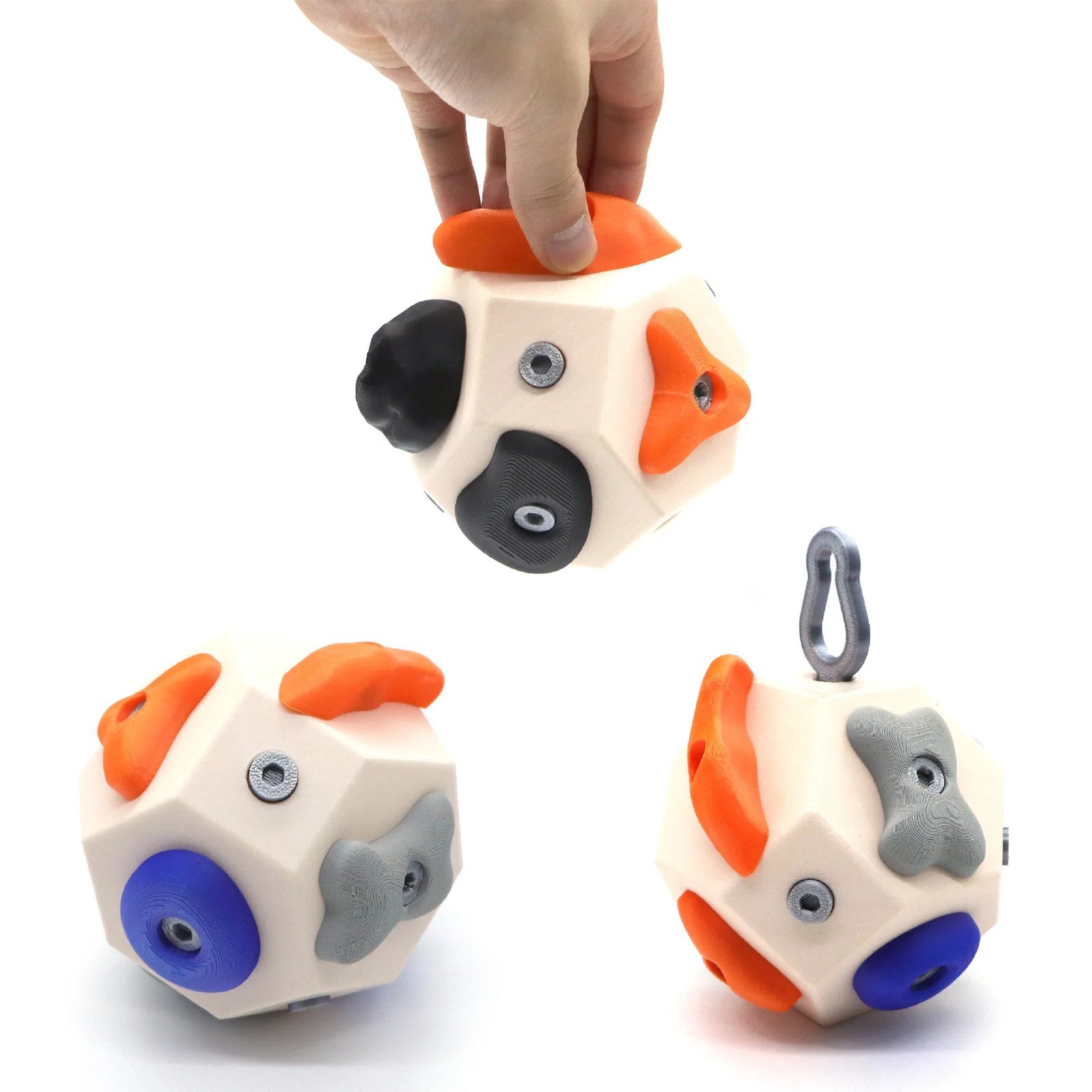
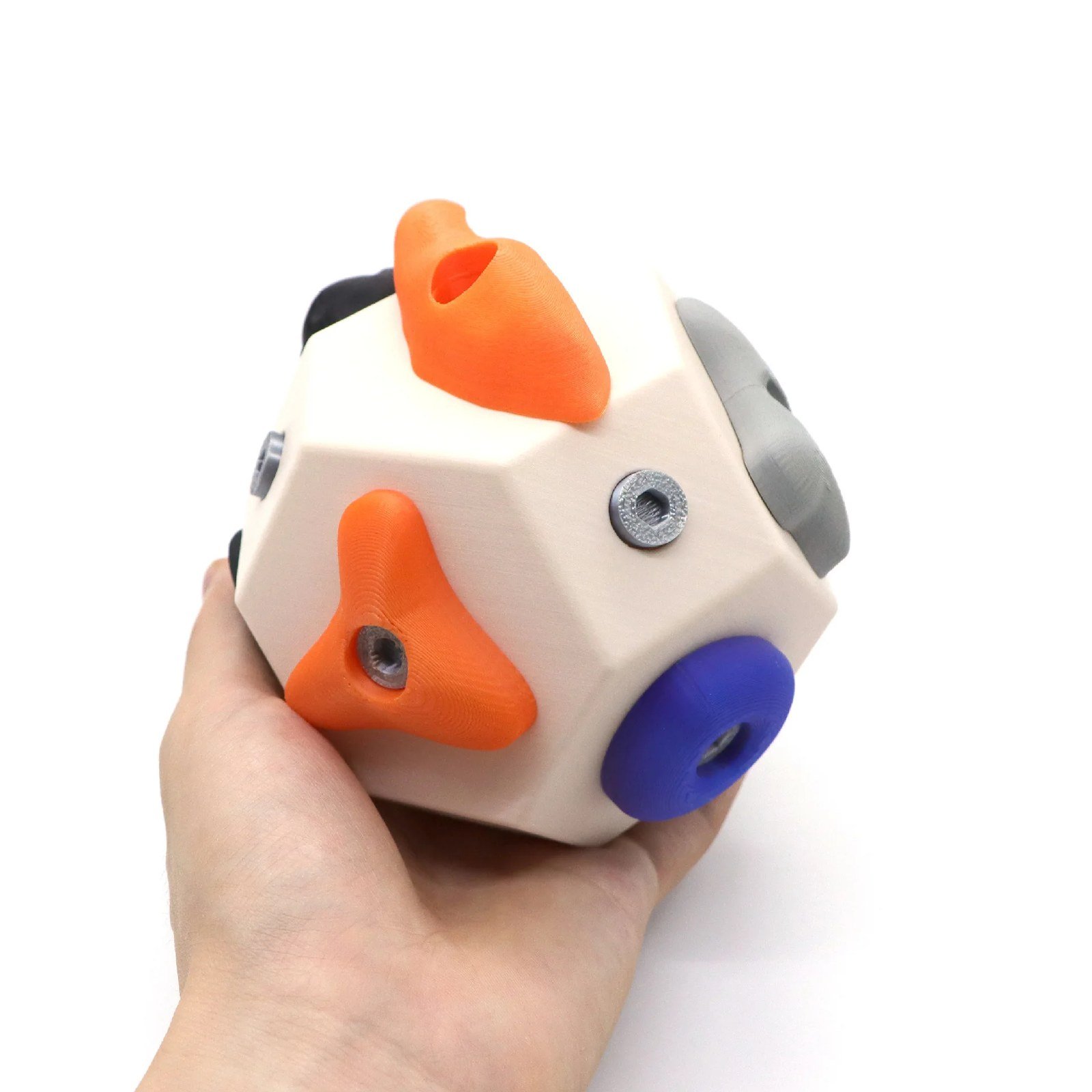
Train your grip without the hang
PocketCrag puts 8 climbing holds in the palm of your hand. 30 challenges, free US shipping and a 30-day guarantee.
Shop PocketCrag →Portable hangboard FAQ
Are portable hangboards good for beginners?
They can be, if used gently. Most coaches suggest climbing consistently for several months to a year before structured hangboard training, then starting with large edges, feet-assisted hangs and only one or two short sessions a week.
How do you hang a portable hangboard?
Most portable hangboards are hung with a sling or cord from a pull-up bar, a sturdy tree branch or a rig at the gym. Some are no-hang devices: you stand on the floor and lift a weight attached to the block instead of hanging your body.
How often should you hangboard?
For most recreational climbers, two short sessions per week with at least 48 hours between them is plenty. Fingers adapt more slowly than muscles, so more is not better.
Is a hand-held climbing block a hangboard?
No. A hand-held climbing block like PocketCrag isn't a hangboard and doesn't load the fingers with full body weight. It's a lighter, playful way to practice grip positions and movement between holds, which makes it useful on rest days, for travel and for beginners not yet ready to hangboard.