 Pocket
Indoor Climbing Training Plan for Beginners: A Free 12-Week Program
A good indoor climbing training plan for beginners is 2–3 gym sessions a week with a rest day between each, plus one 30-minute home workout. Spend weeks 1–4 on technique, weeks 5–8 on strength, weeks 9–11 on harder problems, and make week 12 an easy test week. Skip hangboard training for now; climbing itself builds your fingers.
Most new climbers improve fast for a few months, then hit a plateau. A simple climbing training plan keeps the progress coming. This 12-week program tells you what to do in each gym session, which climbing workouts to add at home, and how to get stronger without hurting your fingers. It works for bouldering and for roped free climbing (which, despite the name, is done with a rope).
The plan in one line: climb 2–3 times a week with rest days between, spend weeks 1–4 on technique, weeks 5–8 on strength, weeks 9–11 on harder problems, and take an easy week 12. Add one short home workout a week.
Who this climbing training plan is for
This indoor climbing training plan is built for beginners in their first year who climb at a gym, can get up VB–V3 boulders or easy top-rope routes, and want a simple structure instead of random sessions. You need gym access 2–3 days a week and about 30 minutes at home once a week.
If you've never climbed before, go a handful of times first and read bouldering for beginners. The plan works whether your gym is bouldering-only or has ropes: on a bouldering wall, "problems" are short climbs; on ropes, swap in routes of the same difficulty.
Before you start: This is general guidance, not medical advice. If you have an injury or a health condition, check with a doctor or physical therapist first. Stop any exercise that causes sharp pain.
The 12-week climbing training program at a glance
A 12-week climbing training program for beginners works best in four blocks: four weeks of easy, high-volume climbing to learn technique, four weeks of harder problems for strength, three weeks of projecting near your limit, and one lighter week to recover and test yourself. Each block builds on the one before it.
Weeks 1–4: Technique and volume
Climb lots of problems a grade or two below your max. Focus on quiet feet, straight arms and smooth movement. Aim for 15–25 problems per session. This builds the movement base that every later phase depends on.
Weeks 5–8: Strength
Spend part of each session on problems near your limit. Rest 2–3 minutes between hard attempts so every try is quality. Add pull-ups and core work once a week. Fingers get stronger here from climbing on smaller holds.
Weeks 9–11: Projecting
Pick 2–3 problems just above your level and work on them over several sessions. Break them into moves, try different beta, and link sections. This teaches you to climb at your limit.
Week 12: Rest and test
Cut your volume in half. Climb for fun, then try a problem that felt impossible in week 1. Most people are surprised.
Indoor climbing training plan for beginners: week by week
Here is the whole indoor climbing training plan for beginners in one table you can screenshot and take to the gym. "Max" means the hardest grade you can currently climb in a few tries; if a week feels too hard, repeat it instead of moving on.
| Week | Gym sessions | Main block (each session) | Home day |
|---|---|---|---|
| 1–2 | 2 | 15–20 problems, 2 grades below max. Focus: quiet feet, straight arms. | Core + push-ups only |
| 3–4 | 2–3 | 20–25 problems, 1–2 grades below max. Repeat each one more smoothly. | Full home workout |
| 5–6 | 2–3 | Warm-up volume, then 4–6 attempts at your max grade, 2–3 min rest between. | Full home workout |
| 7–8 | 2–3 | 6–8 limit attempts per session, 2–3 min rest. Add pull-ups after one session a week. | Full home workout |
| 9–11 | 2–3 | Pick 2–3 projects one grade above max. Work moves, then link sections. | Full home workout |
| 12 | 2 | Half volume, climb for fun, then retry your week-1 benchmark problem. | Rest or light mobility |
Training for bouldering? This table already is a bouldering training plan: each "problem" is one boulder problem. On a roped wall, count one route as one to two problems and climb fewer of them.
What an indoor climbing training week looks like (gym vs home days)
A typical beginner week of indoor climbing training has two or three gym days spread out with a rest day between each, one 30-minute home workout on a non-climbing day, and at least two full rest days. Gym days do the real climbing; the home day trains core, pulling and antagonist muscles without stressing your fingers.
| Day | 2 gym sessions / week | 3 gym sessions / week |
|---|---|---|
| Mon | Gym: climb (main session) | Gym: climb (main session) |
| Tue | Rest or light hand work | Rest or light hand work |
| Wed | Home: 30-min workout | Gym: climb |
| Thu | Gym: climb | Rest |
| Fri | Rest | Home: 30-min workout |
| Sat | Optional easy gym climb | Gym: climb |
| Sun | Rest | Rest |
- Gym days: warm up, then do the main block for your current phase: easy volume in weeks 1–4, limit attempts in weeks 5–8, projects in weeks 9–11.
- Home day: pull-ups or rows, push-ups, core work and light finger extensions (full list in the home workout below), with no hard finger loading.
- Rest days: walk, stretch or do nothing; this is when fingers, tendons and skin actually adapt.
- Bouldering-only gym: follow the same week; bouldering training covers strength and technique, so you don't need a separate bouldering training plan.
Never climb hard on back-to-back days when you're starting out. Fingers and skin recover slower than you think.
How to structure a climbing session
A beginner gym session should last about 75 to 90 minutes and follow the same four steps every time: a 15-minute warm-up on easy problems, a 40 to 60 minute main block matched to your current phase, optional conditioning such as pull-ups or core, and a short cool-down with easy climbing and stretches.
- Warm-up (15 min): light cardio, arm circles, then 5–8 very easy problems (full routine in our climbing warm-up guide).
- Main block (40–60 min): the focus of the current phase: volume, limit attempts or projects.
- Conditioning (10–15 min, optional): pull-ups, hanging knee raises or core work.
- Cool-down (5–10 min): easy climbing, forearm and shoulder stretches.
Climbing workout at home (no wall needed)
Yes, you can train for climbing at home without a wall: one 30-minute workout a week of pull-ups or rows, push-ups, core exercises and light finger-extensor work strengthens the muscles that support climbing and balances out all the pulling. It complements gym climbing but can't replace it, because technique only improves on real holds.
| Exercise | Sets × reps | Why |
|---|---|---|
| Pull-ups (or band-assisted / inverted rows) | 3 × 5–8 | Pulling strength |
| Push-ups | 3 × 10–15 | Balances pulling, protects shoulders |
| Hanging knee raises | 3 × 8–12 | Core tension for steep climbing |
| Hollow body hold | 3 × 20–30 s | Body tension |
| Reverse wrist curls | 2 × 15 | Forearm balance |
| Rubber-band finger extensions | 2 × 25 | Finger extensors |
| Hand-held climbing block challenges | 5–10 min | Grip positions and sequencing |
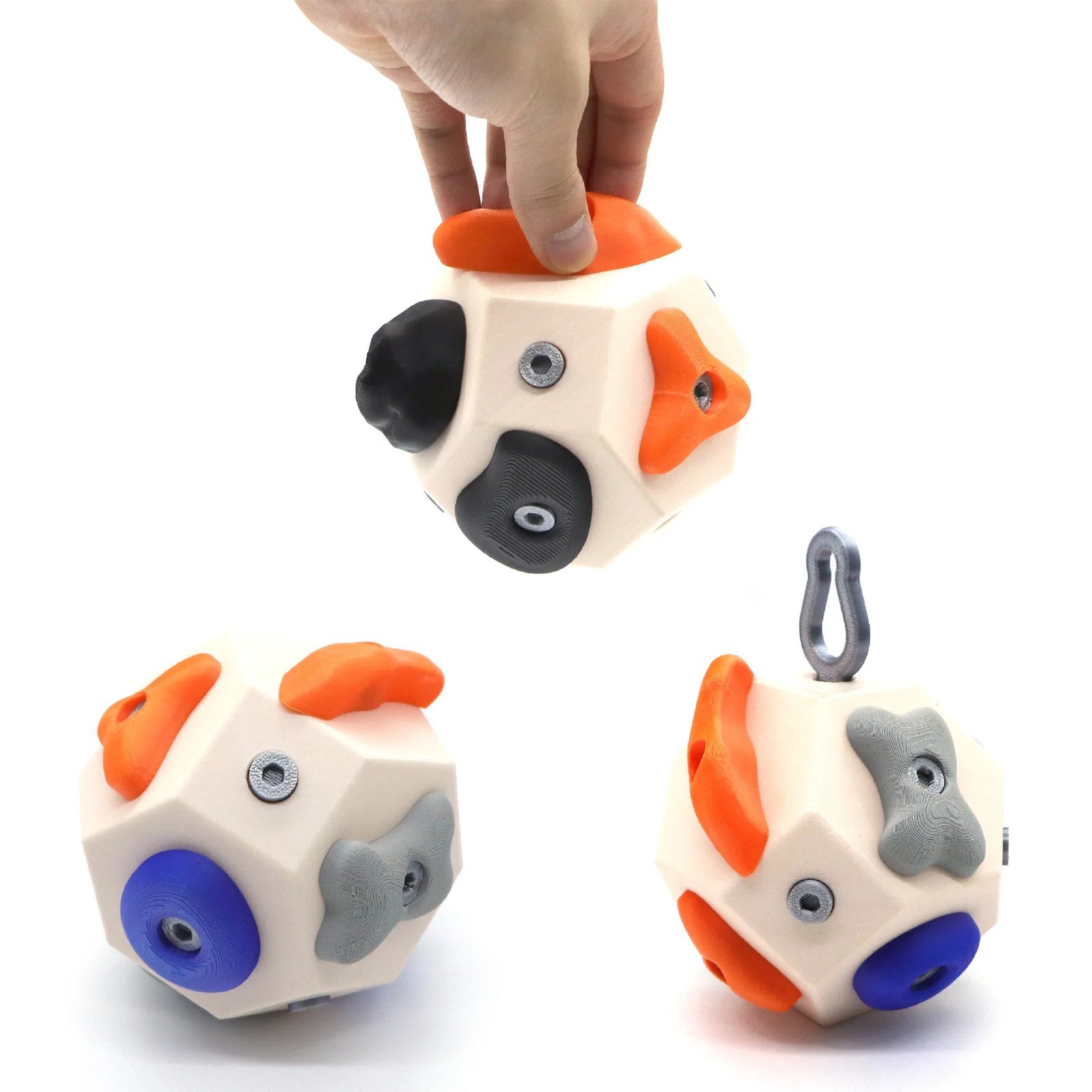
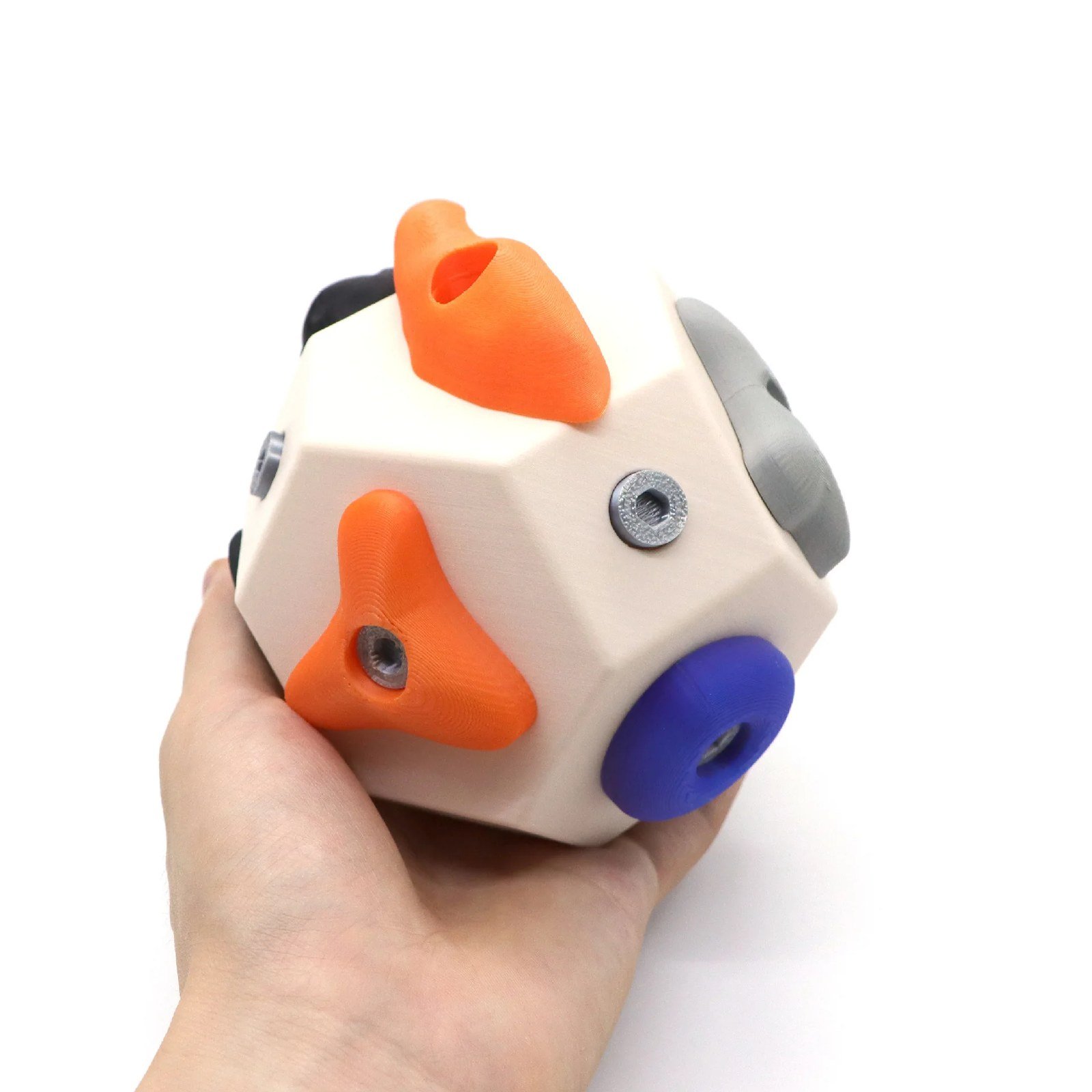
For the last one, a hand-held climbing block like PocketCrag lets you practice crimps, pinches and pockets and plan sequences around 8 bolt-on holds, without the heavy load of a hangboard. Its 30-challenge pack goes from warm-up to very hard, so it grows with you. For more finger exercises, see finger strength for climbing.
When to add hangboard training
Not in this plan. Finger tendons adapt much slower than muscles, so most coaches suggest climbing consistently for several months to a year before structured hangboarding. When you're ready, start with our beginner hangboard guide and then the hangboard workout by level.
Add climbing to your rest days
PocketCrag: 8 real hold shapes, 30 challenges, free US shipping and a 30-day guarantee.
Shop PocketCrag →How to track your progress
The easiest way to track climbing progress as a beginner is to log every problem you send with its grade, pick one benchmark problem you can't do in week 1 and retry it in week 12, and film a few climbs. Most beginners see clear gains within 8 to 12 weeks, mostly from better technique.
- Keep a send log. Write down the problems you climb and the grade. Seeing progress keeps you motivated.
- Pick a benchmark problem. Choose one problem in week 1 that you can't do and retry it in week 12.
- Rate each session. A quick 1–10 for energy helps you spot when you need more rest.
- Film your climbing. A short phone video shows footwork mistakes you can't feel.
Climbing with a friend who's just getting into it? Our gift guide for rock climbers lists beginner-friendly training tools and small extras like chalk and finger tape.
Wondering whether climbing alone is enough exercise? Read whether rock climbing is a good workout. Brand new to the wall? Start with our rock climbing tips for beginners.
Once pull-ups feel solid, you can add tuck holds from our front lever guide as an advanced core exercise.
Climbing training plan FAQ
How many days a week should a beginner climber train?
Two to three climbing sessions a week, with at least one rest day between them, is ideal for most beginners. Add one short off-the-wall workout for core and antagonist muscles on a non-climbing day if you have time, and keep at least two full rest days a week.
Can you train for climbing at home?
Yes, partly. Without a wall you can train pulling strength, core, shoulders and finger extensors with pull-ups or rows, push-ups, hanging knee raises, hollow holds and rubber-band extensions. Home training supports gym climbing but doesn't replace it, because technique and footwork only improve by climbing on real holds.
What is a good climbing workout at home?
Without a wall, focus on pull-ups or rows, push-ups for balance, core work like hanging knee raises and hollow holds, shoulder mobility and light finger work such as rubber-band extensions or a hand-held climbing block.
Should beginners do hangboard training?
Not right away. Most coaches recommend climbing consistently for several months to a year first, because fingers adapt slower than muscles. Climbing itself builds finger strength quickly at the start.
How long until I see progress in climbing?
Most beginners notice big improvements within the first 8–12 weeks of consistent climbing two or three times a week, mostly from better technique and footwork. Strength gains build steadily over the following months, and finger strength takes the longest because tendons adapt slower than muscles.
How do I train for bouldering as a beginner?
Boulder two or three times a week with a rest day between sessions. Start each session with easy problems, then spend most of it on lots of problems a grade or two below your max to learn technique. After about a month, add a few limit attempts with 2 to 3 minutes of rest between tries. Add pull-ups and core work once a week and skip hangboards for now.
Is 12 weeks long enough for a climbing training program?
Yes, for a first program. Twelve weeks gives you time to build technique, add strength and work on a few projects, and most beginners see clear progress in that time. When you finish, repeat the cycle with slightly harder grades, or move on to a more advanced plan once you have climbed consistently for 6 to 12 months.
Can I follow this plan at a bouldering-only gym?
Yes. The plan works the same at a bouldering gym: treat each 'problem' as one boulder problem and follow the same weekly schedule and phases. If your gym has ropes, you can swap in top-rope routes of the same difficulty on any day.